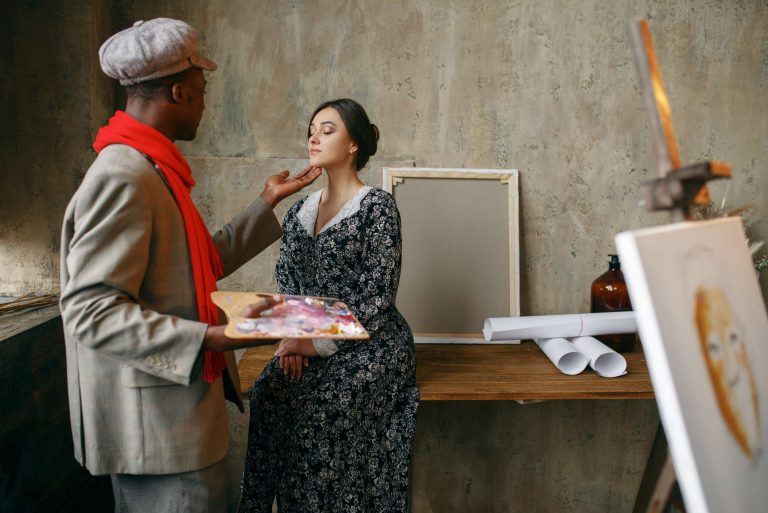
Art cannot be considered in isolation; it is more or less closely enveloped by the social, political, and cultural context of its time. When you understand it isn’t hard to see where he is coming from – and context is crucial when it comes to ‘getting’ anything. Each brushstroke, each kind of stuff, and each composition is the fingerprint of a person’s surroundings, influences and intended audience. When learners place art in its historical and cultural context, they begin to peel back layers of meanings that can remain otherwise hidden, hearing the artists’ voice and the values of their community.
Investigating context Exploring of context to develop critical thinking by prompting learners to consider cause and effect, open minded enquiry. Whether that means studying how Renaissance humanism has shaped painting, or thinking about the impact of industrialization on design, students can connect visual changes to larger historical stakes. ## Contextual analysis is a way of seeing Symbolism Technique Narrative It’s going beyond merely looking, instead it is engaging the children to think about why art was created, what ideas of positions did it express and how does that reflect or push against the cultural norms.
To add context to the study of art will also expand a respect for diversity of expression. Exploring various cultures, periods, and points of view helps students understand that creative endeavors are influenced by individual traditions, philosophies, and materials. This consciousness promotes empathy and a more universal understanding of the human experience as students are introduced to voices and viewpoints that represent life experiences unlike their own. Acknowledging dissimilarities broadens capacities for analysis and interpretation, enabling students to compare with knowledge rather than without it and see similarities across time periods and cultures.
Visual analysis enhances the contextual learning to an even higher extent. Looking at a painting or a statue through the lens of its history, it’s religious background, it’s historical and cultural context has always given hints to its composition, colors and subjects. The light in a Baroque painting, the iconography of medieval religious art, or the abstraction in a modernist work is significant only if it is related to its cultural and intellectual context. From their context, art becomes a series of stories: stories about human thought, labor and dialogue.
In the end, understanding context allows learners to enter art at a more profound level where technical skill intersects with cultural literacy. It influences a richer comprehension of history, society and creator’s art. The study of context prepares students to understand works of art thoughtfully, articulate findings clearly and appreciate complexities in the relationship between visual form and human culture. As learners take in context as an integral part of their experience with art, they develop both intellectual depth and a lasting fascination with the stories art has to tell throughout time and place.