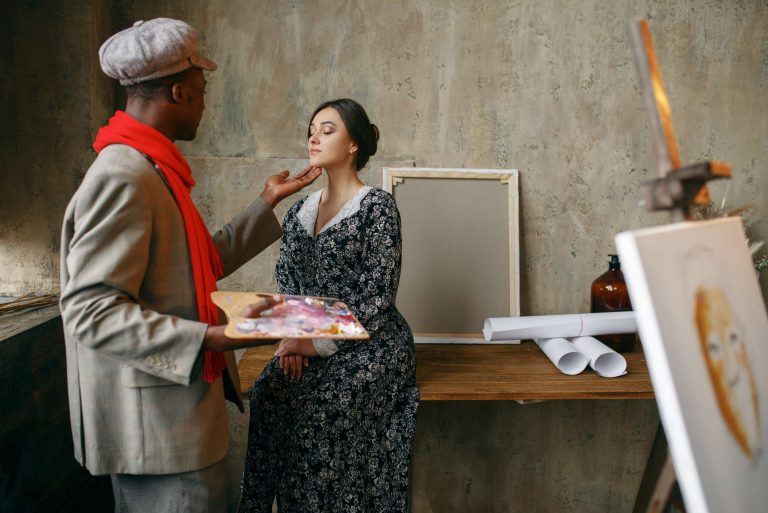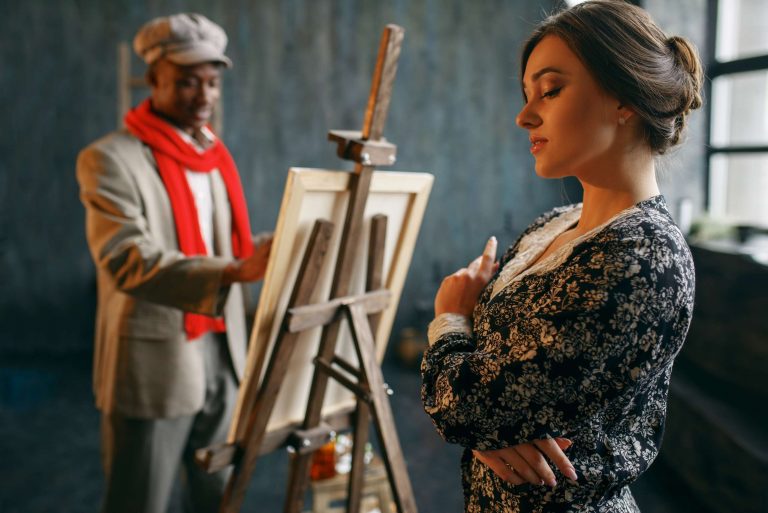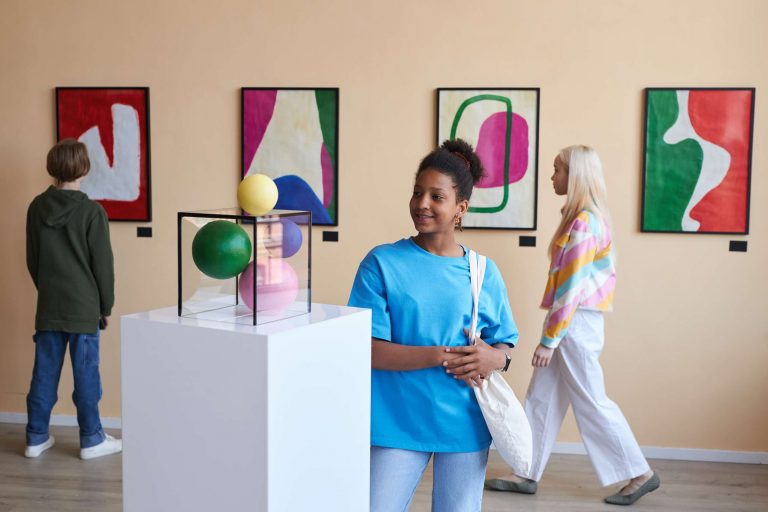
Art education works best when theoretical learning is combined with practical application. Active engagement with materials, skills and creativity exercises help students experience the concepts in a concrete and lasting manner. It is one thing to look at a masterpiece, yet another to try out its structure, brushwork or design principle in order to gain insight into the creative decisions and techniques. This is a hands-on approach that turns passive study into active preparation and rep violation, not to mention solidifying the need to ‘factor-in’ those moments of technical certainty that can be lost when we’re left to our own devices. Students soon learn that theory and practice reinforce each other, making a very obvious path to mastery.
It is experiential, allowing for experimentation and self discovery. Through drawing/painting/digital exercises, students are encouraged to encounter creative process and deal with problems in the arts. Errors and adaptations are part of the learning process, based on resilience and adaptability. By doing, students learn not just how techniques work, but why they were originated historically and how they influence visual communication. This process of returning to observation feeds both skill development and critical thinking, serving as a bridge between observation and interpretation.
Participating in the activity also enhances memory and understanding. Tactile engagement in remaking forms, textures or compositions elicit other cognitive pathways than reading affords or the lecture room study. People remember content better when it is used in a practical setting, bridging visual analysis with the practice in the creation. Concrete experience, in contrast with abstract thought, is the foundation of understanding; translating theory into practice, it allows one to embody such abstractions as perspective, proportion and color theory. These abilities eventually merge into a more organized visual literacy that allows for deeper understanding and considered aesthetic judgment.
Hands-on learning also nurtures individual voice and creativity. Doing so keeps the conversations real and by experimenting historical techniques students start to develop a language of their own through (but not limited to) understanding the process past masters would apply. This tension between emulation and innovation promotes critical interpretation of the artistic past. Students develop confidence, not only with technical skills, but also in being able to articulate and discuss ideas about building work that they can criticise their own work and make meaningful creative decisions informed by knowledge as well as a personal perspective.
In the end, a melding of this practical learning mixed with art historical study turns education into an exciting journey. Learners now have a role shape by doing, reflecting and developing skills that do not stop at the act of watching. This integrated approach fosters skills and creativity in students, who can become fully immersed in the arts and develop an enduring knowledge of visual culture from memory. By helping to relate theory and practice, hands-on learning also becomes a key part of the study of art history and an essential way to develop thought out confidence in looking at pictures.